The Big Five & the Little Five
South Africa's Big Five — lion, leopard, elephant, buffalo and rhino — were named by big-game hunters as the most dangerous animals to hunt on foot, not the largest. The Little Five borrow those names. The country is one of 17 megadiverse nations and holds the Cape Floral Kingdom.
Few phrases in travel are as famous, or as misunderstood, as "the Big Five." Most visitors assume it ranks South Africa's five largest animals. It does not. The term is a relic of the colonial-era hunting trade, and once you know its real origin, the whole idea reads differently — and sets up a charming conservation-era joke, the Little Five, that rewards travellers who look down as well as up.
Why "Big" Means Dangerous, Not Large
The Big Five was coined by professional big-game hunters at the end of the 19th century to describe the five animals they considered the most difficult and dangerous to hunt on foot — a reputation earned through the animal's temperament, unpredictability and tendency to charge, not its bulk. As South African Tourism puts it, "the term comes from the animals considered most dangerous to hunt." That is why the hippopotamus and giraffe, both larger than a leopard, never made the list. The Big Five are:
- Lion — the only truly social big cat, and formidable in a pride
- Leopard — elusive, powerful and famously hard to track
- African elephant — the largest land animal, and dangerous when threatened
- Cape buffalo — unpredictable and known for retaliating against hunters
- Rhinoceros — both the white and black rhino, poorly sighted but capable of an explosive charge
Today the "hunt" is almost entirely photographic, but the name has stuck as the headline goal of nearly every safari.
Meet the Little Five
As conservationists worked to broaden interest beyond charismatic megafauna, they coined a witty counterpart: the Little Five, five small creatures that each borrow part of a Big Five member's name. Spotting them takes patience and a good guide rather than a long lens, and they make a satisfying second quest on any game drive. They are:
- Elephant shrew (sengi) — a tiny insectivorous mammal with a long, flexible, trunk-like snout
- Ant lion — best known as a larva that digs a conical sand pit to trap ants; the adult resembles a delicate, dragonfly-like insect
- Rhinoceros beetle — a scarab whose males carry a horn-like projection; among the strongest insects for their size, yet harmless to people
- Buffalo weaver — typically the red-billed buffalo weaver, a bird that builds bulky communal nests in the savanna
- Leopard tortoise — one of the largest tortoise species, its high-domed shell patterned with dark, rosette-like markings
One of the World's Most Biodiverse Countries
South Africa is one of just 17 recognised "megadiverse" countries. It shelters roughly 7% of the world's bird species and about 5% of its mammal species, and its plant life is globally exceptional — the country ranks in the world's top ten for plant richness, and around two-thirds of its plant species are found nowhere else on Earth.
The crown jewel is the Cape Floral Kingdom. According to SANBI, it is "the smallest of the six Floral Kingdoms in the world, and is the only one contained in its entirety within a single country." Concentrated largely in the fire-adapted fynbos of the Western Cape, it holds on the order of 9,000 plant species — with roughly 70% endemic — packed into less than 6% of South Africa's land area, a density that rivals or surpasses many tropical forests. Its protected areas are inscribed on the UNESCO World Heritage List, and the region is recognised as one of the planet's richest and most threatened biodiversity hotspots.
Where to See the Big Five (as of 2026)
The classic destination is Kruger National Park, spanning Mpumalanga and Limpopo. All of the Big Five occur here, and Kruger is one of the few African parks where self-drive safaris are practical, with an extensive road network and rest camps; note, as of 2026, that it lies in a malaria-endemic region, so travellers should seek current medical advice on prophylaxis. Bordering the park's western flank, the private reserves of the Greater Kruger — Sabi Sands (renowned for exceptional leopard sightings), Timbavati and Klaserie — offer guided drives with no fences separating them from Kruger's wildlife.
For a malaria-free alternative, Addo Elephant National Park in the Eastern Cape protects all of the Big Five and, uniquely, extends its marine boundary to include the southern right whale and great white shark — locally marketed as the "Big Seven." Marakele National Park in the Waterberg, within easy reach of Johannesburg and Pretoria, is another Big Five park. As every reserve makes clear, wild animals move freely and nothing is guaranteed — but across South Africa's national parks and private reserves, the odds of a memorable encounter are among the best in Africa.
Places to experience it
- Wildlife & SafariMpumalanga
Kruger National Park
South Africa's flagship safari — Big Five country roughly the size of a small nation.
Verified · 33 sources 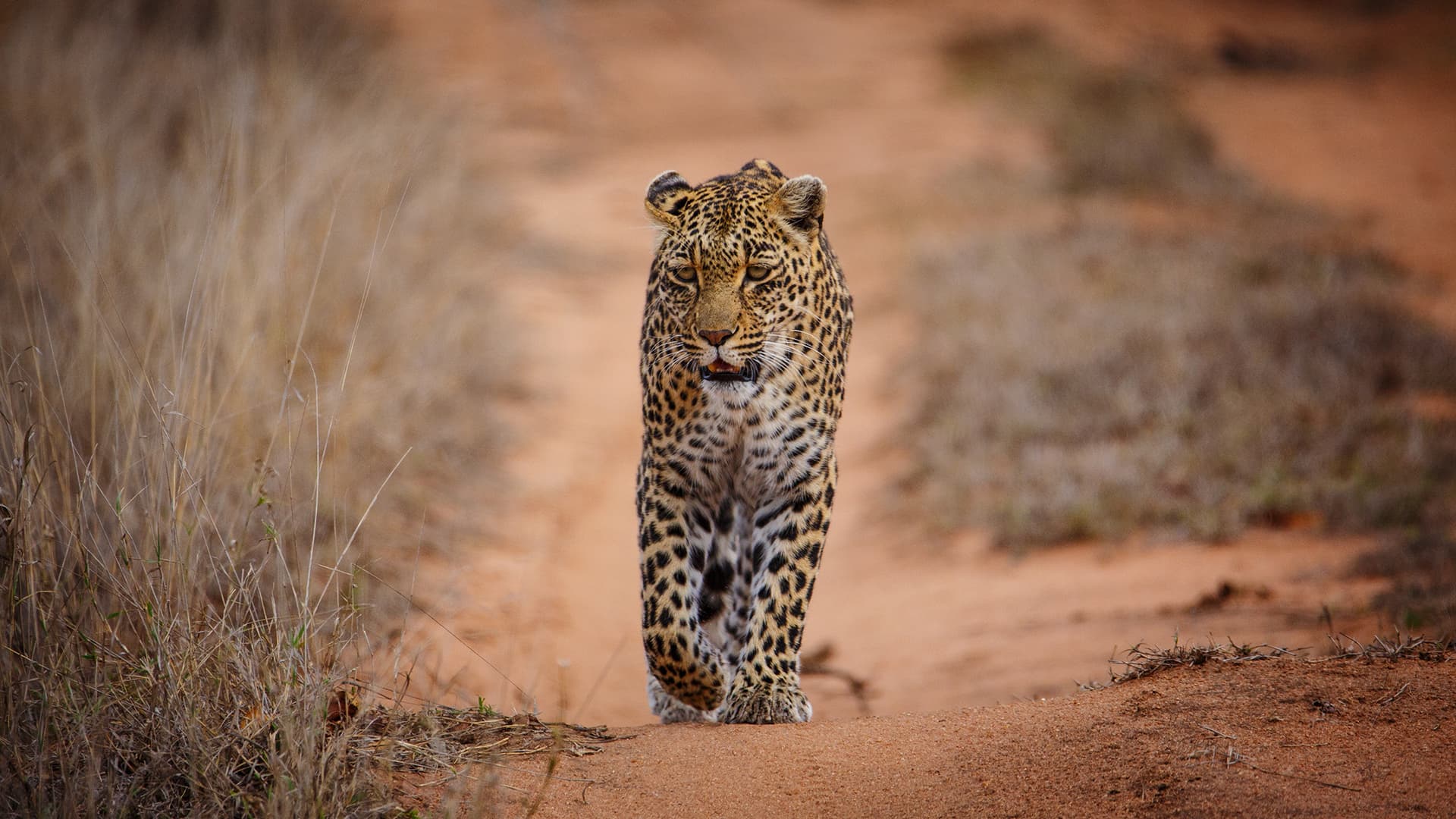 Wildlife & SafariMpumalanga
Sabi Sand Game Reserve
On Kruger's unfenced western edge, this pioneering private reserve is said to deliver Africa's most reliable leopard sightings, with the Big Five roaming freely across some 65,000 hectares of Lowveld wilderness.
Verified · 4 sources- Wildlife & SafariEastern Cape
Addo Elephant National Park
Malaria-free Big Seven country in the Eastern Cape.
Verified · 1 source  Wildlife & SafariNorth West
Pilanesberg National Park
A malaria-free Big Five wilderness set in the eroded crater of a volcano that last erupted well over a billion years ago, its concentric stone rings still legible from the air.
Verified · 4 sources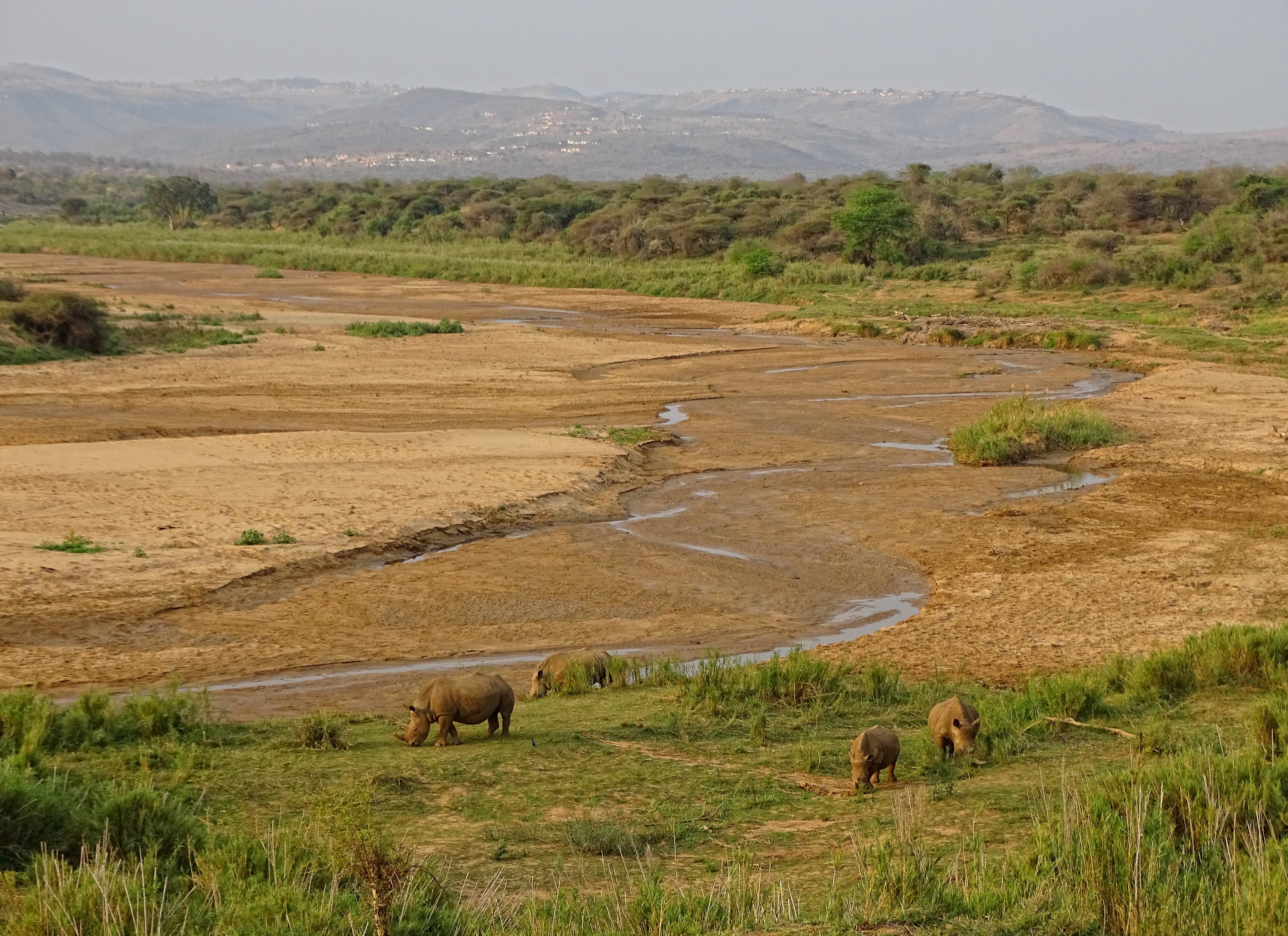 Wildlife & SafariKwaZulu-Natal
Hluhluwe-iMfolozi Park
Widely documented as Africa's oldest proclaimed game reserve, where Operation Rhino brought the southern white rhino back from the brink and all of the Big Five still roam the hills of Zululand.
Verified · 4 sources


Sources
Verified · 5 sources
- Tourism boardExhilarating and awe-inspiring: South Africa's Big FiveSouth African Tourism (southafrica.net)
- GovernmentFynbos BiomeSANBI (South African National Biodiversity Institute), PlantZAfrica
- GovernmentSouth Africa's biodiversity profile - National Biodiversity AssessmentSANBI (South African National Biodiversity Institute)
- MediaWhat Are The Little Five Animals Of South Africa?WorldAtlas
- Academic / referenceBig Five gameWikipedia
Facts last reviewed Aug 24, 2026.