
 Heribert Bechen, CC BY-SA 2.0 / Wikimedia Commons
Best time to visit
Open daily year-round; late winter and early spring (roughly August to October) is kidding season around the goat tower, and the February-to-April harvest is the busiest time in the cellar.
Fairview lies on the lower slopes of Paarl Mountain, and it began under a far stranger name: in 1693 the property was designated a farm by Simon van der Stel, then Governor of the Cape, and called Bloemkoolfontein — cauliflower fountain. The first wine recorded on the land was made six years later, in 1699. The modern estate, though, is a twentieth-century creation. In 1937 Charles Back, a Lithuanian immigrant, bought the farm, and the Back family has held it ever since — the present Charles Back is the third generation. Much of the land, unsuited to grapes, went to pasture.
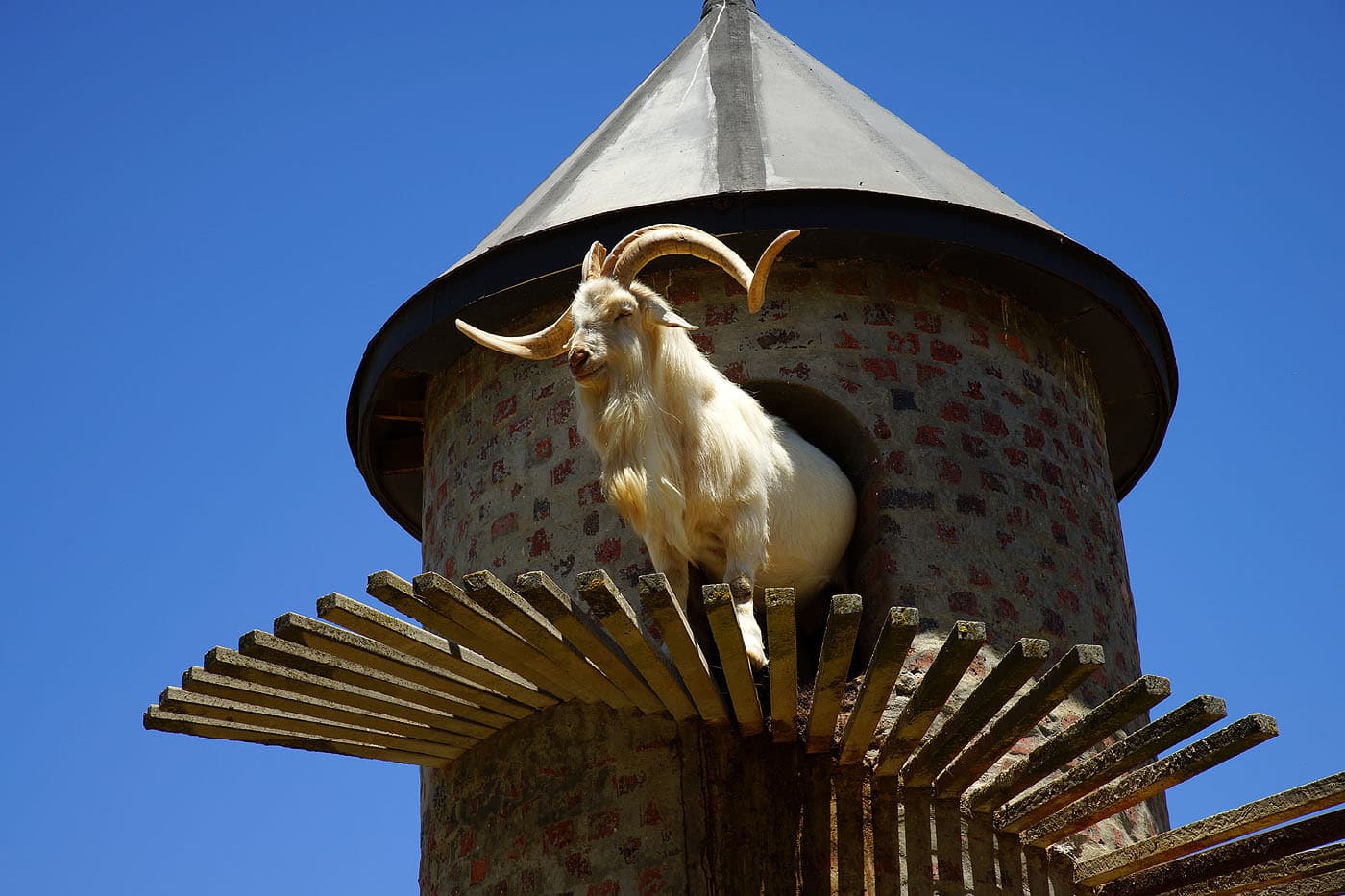
That pasture is the reason people know the name. Cheese-making began in 1980, when Cyril Back brought in a herd of Saanen milking goats, and in 1981 Charles Back built the goat tower — a two-storey brick folly with a steep metal roof, windows and a spiralling wooden staircase, said to have been inspired by a nineteenth-century tower he had seen at a wine estate in Portugal's Vinho Verde region. Only a handful of the estate's several hundred goats actually live in it. The tower also produced a wine: in the estate's own telling, the name Goats do Roam grew out of a story about the tower goats' wanderings shared with its British importer. The label reached UK shelves in late 1999 and America in 2001, and when Fairview tried to register it in the United States, France's appellation authority objected that it played on Côtes du Rhône. The row peaked in August 2003 with CNN and BBC coverage of a placard-waving demonstration outside the French embassy in Cape Town, which ended with the presentation of a magnum of Goats do Roam and a bag of goat manure labelled "Goats do Poo". The threats of litigation went quiet; the brand did not.
Fairview describes itself as a working farm housing a collection of micro-businesses, and it is unusually easy to visit. The tasting room is open seven days a week and — unlike most winelands cellars — pairs the full range of wines against the day's artisanal cheeses, both goat's and cow's milk, with a smaller room set aside for tutored tastings. The Goatshed restaurant, in a wood-beamed heritage building hung with murals of goats and ancestral portraits, serves Mediterranean-leaning farm food through the day. A shop, deli and bakery round it out, and the tower stands just outside, occupied.
Sources
Verified · 6 sources
- OperatorFairview Wine and Cheese — VisitFairview
- Operator20 Years of Goats Do Roam!Fairview
- Academic / referenceFairview Wine and Cheese Estate, near PaarlSouth African History Online
- Tourism boardFairviewDiscover Paarl (Paarl Tourism)
- MediaGoats continue to Roam despite Rhône objectionsDecanter
- MediaThe Goat Tower of Fairview Cheese & Wine FarmAtlas Obscura
Facts last reviewed Aug 27, 2026.
More Wine & Food
 Wine & FoodWestern Cape
Babylonstoren
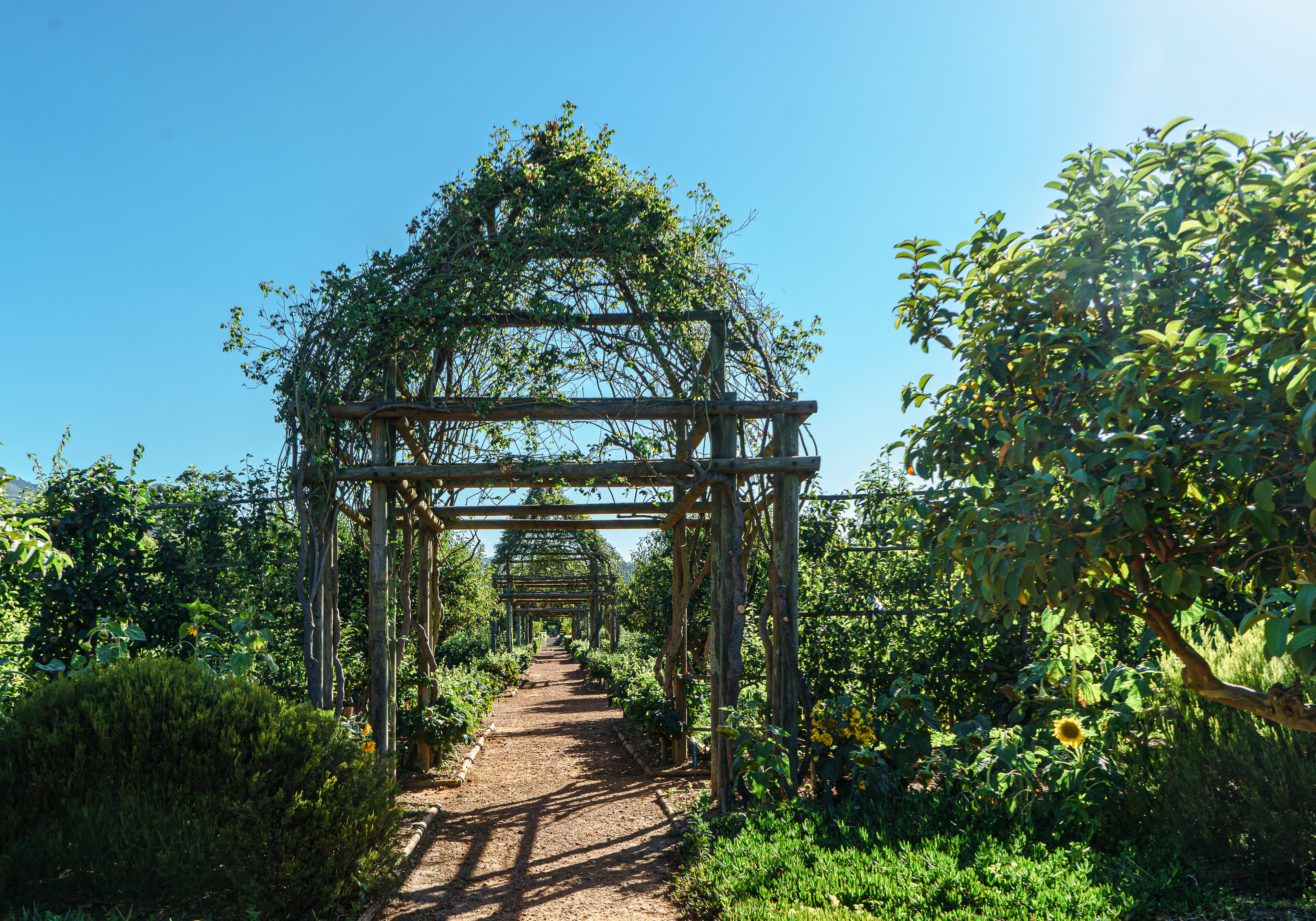
A 1692 Cape Dutch farm between Paarl and Franschhoek whose owners planted a three-and-a-half-hectare garden in which every single plant is edible or medicinal.
Verified · 6 sources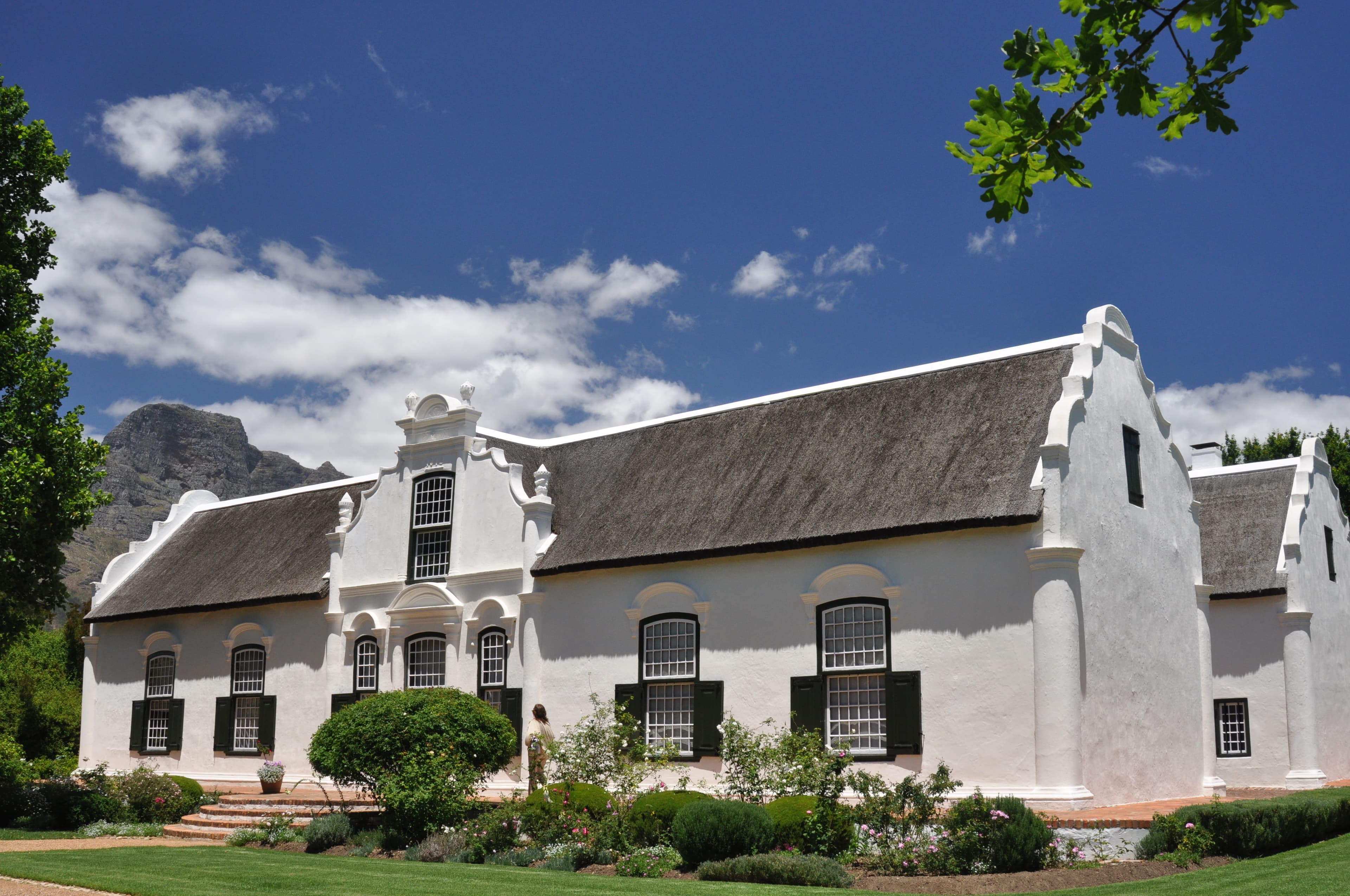 Wine & FoodWestern Cape
Boschendal
Title deeds dated 1685, a gable that still carries the initials of the couple who raised it in 1812, and a national heritage site at the heart of a roughly 1,800-hectare working farm.
Verified · 6 sources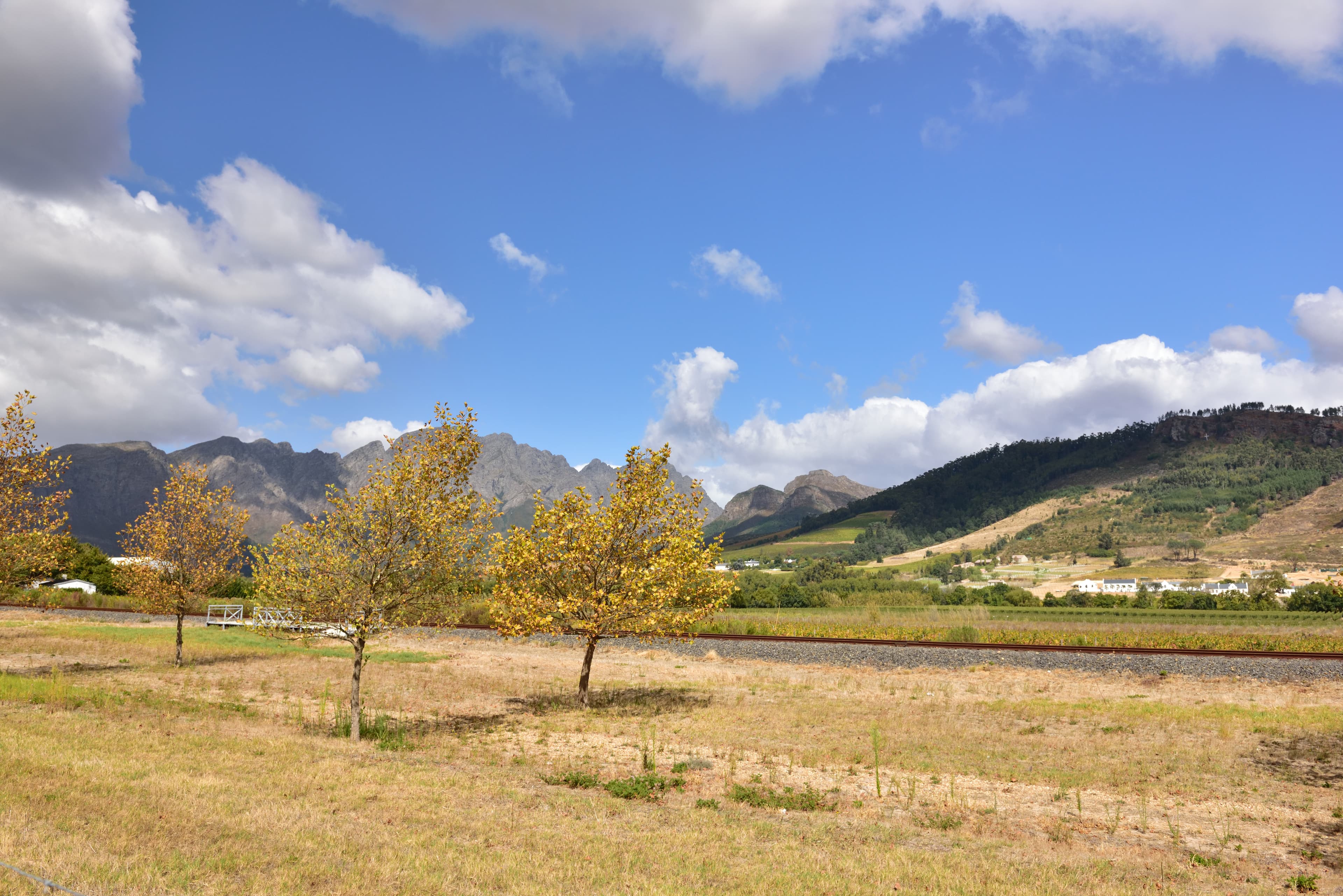 Wine & FoodWestern Cape
Franschhoek
A French Huguenot refuge cupped in a mountain-ringed valley, where Cape Dutch wine estates and a hop-on tram trade on more than three centuries of the vine.
Verified · 4 sources