
 Matt Kieffer, CC BY-SA 2.0 / Wikimedia Commons
Best time to visit
The dry winter months of roughly May to September, when thinning vegetation and animals gathering at waterholes make game easier to spot and the days stay cool and comfortable.
Pilanesberg rises from the eroded remains of an ancient volcano that last erupted well over a billion years ago, leaving behind the near-circular Pilanesberg Alkaline Ring Complex — concentric rings of hills and valleys that NASA's Earth Observatory ranks among the world's largest and best-preserved alkaline ring dike complexes, built from unusual igneous rocks such as syenite and foyaite. Seen from above, the old crater still reads as a set of stone rings drawn around a central plain.
The reserve itself is a feat of restoration. Proclaimed in 1984 after rehabilitation began in 1979, it was populated through Operation Genesis, one of the largest game translocations ever undertaken, which released some 6,000 animals of more than twenty species. Today its roughly 550 square kilometres (about 55,000 hectares) hold all of the Big Five — lion, leopard, elephant, rhino and buffalo — alongside brown hyena, sable antelope and African wild dog, with more than 350 recorded bird species. The park is managed by the North West Parks and Tourism Board.
Perched on cool, high ground, Pilanesberg is malaria-free — a distinction that, combined with a drive of less than three hours from Johannesburg and Pretoria and a position right beside the Sun City resort, makes it one of the most accessible Big Five parks in South Africa. A network of game-viewing roads threads the old crater, open to self-drive visitors and guided drives alike.
Sources
Verified · 4 sources
- Tourism boardPilanesberg National Park, North West - Spot the Big 5 in an extinct volcanoSouth African Tourism (southafrica.net)
- GovernmentPilanesberg Ring Dike ComplexNASA Earth Observatory / NASA Science
- Academic / referencePilanesberg National ParkWikipedia
- MediaPilanesberg National Park, North West ProvinceSA-Venues.com
Facts last reviewed Aug 24, 2026.
More Wildlife & Safari
- Wildlife & SafariEastern Cape
Addo Elephant National Park
Malaria-free Big Seven country in the Eastern Cape.
Verified · 1 source - Wildlife & SafariWestern Cape
Hermanus
One of the world's best spots to watch whales from dry land.
Verified · 1 source 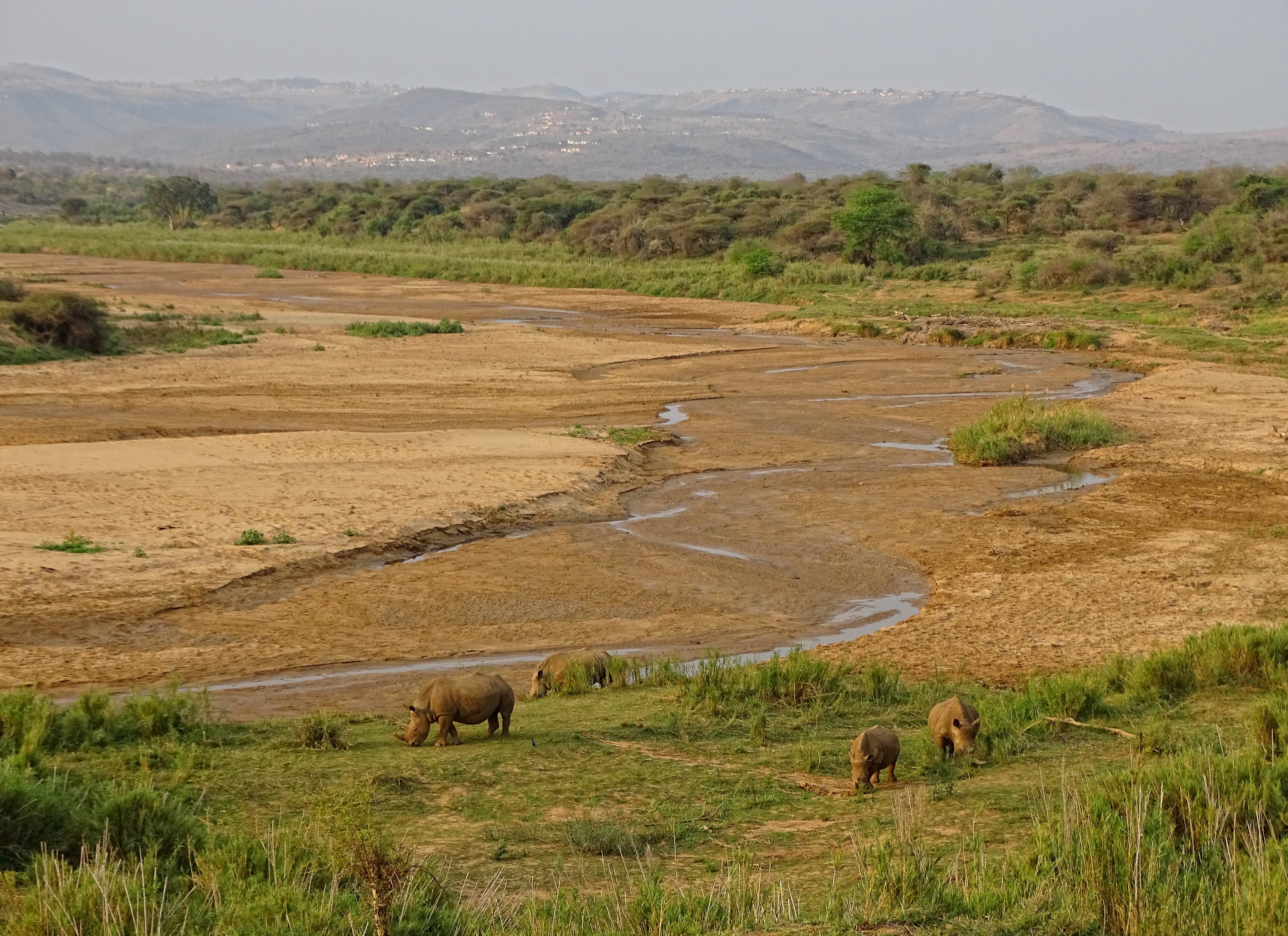 Wildlife & SafariKwaZulu-Natal
Hluhluwe-iMfolozi Park
Widely documented as Africa's oldest proclaimed game reserve, where Operation Rhino brought the southern white rhino back from the brink and all of the Big Five still roam the hills of Zululand.
Verified · 4 sources

