
Culture & etiquette
A warm, practical guide to South African culture and etiquette: the 12 official languages and a few friendly greetings, the braai and Heritage Day, the spirit of ubuntu, plus everyday do's and don'ts on tipping, attended petrol stations, photographing people and staying street-smart.
South Africa calls itself the "rainbow nation," and the phrase is more than a slogan. This is a country of many peoples, faiths and mother tongues living side by side, and travellers who arrive curious and courteous are rewarded with some of the warmest hospitality on the continent. A little effort with a greeting, a readiness to share food around a fire, and plain common sense will carry you a long way. Here is how to travel with grace, and enjoy the exchange.
A nation of many languages
South Africa has 12 official languages. For years there were eleven; in July 2023 South African Sign Language was signed into the Constitution as the twelfth, recognising the country's deaf community and its linguistic heritage. The full set is: Sepedi, Sesotho, Setswana, siSwati, Tshivenda, Xitsonga, Afrikaans, English, isiNdebele, isiXhosa, isiZulu and South African Sign Language.
English is widely spoken and understood in cities, on signage and in business, so you will rarely be stuck. But learning a greeting or two in a local language is genuinely appreciated, and in many communities a proper greeting is expected before you ask a question or start a conversation. A few to try:
- Sawubona (sah-woo-BOH-nah) — "hello" in isiZulu, literally "I see you." A common reply is Yebo ("yes").
- Molo — "hello" to one person in isiXhosa; Molweni when greeting a group.
- Howzit — a relaxed, all-purpose South African "hi, how's it going" in English, best kept for friendly, informal settings rather than a first business meeting.
Even imperfect pronunciation lands well; the effort is the point. A handshake, a smile and eye contact are the standard first greeting, and "how are you?" is usually asked sincerely rather than as a formality.
The braai, Heritage Day and the spirit of ubuntu
If one ritual unites South Africans across background and language, it is the braai — the local barbecue, and far more than a way to cook meat. A braai is a social institution: friends and family gathering around an open fire for hours, everyone contributing, no one in a hurry. Being invited to one is a genuine welcome, so accept warmly, offer to bring something, and settle in.
The braai is so beloved that Heritage Day, the public holiday on 24 September, has been popularly championed as "National Braai Day" — an unofficial rebranding launched by a 2005 campaign (with Archbishop Desmond Tutu as an early patron) to celebrate a tradition that crosses every cultural line. Heritage Day itself is the official holiday, a day to celebrate the country's diverse cultures, languages and food.
Underpinning much of this warmth is ubuntu, a Southern African philosophy often rendered as "I am because we are." Its Nguni proverb, umuntu ngumuntu ngabantu — "a person is a person through other people" — captures a communal ethic of shared humanity, kindness and mutual respect, ideas closely associated with figures like Nelson Mandela and Desmond Tutu. You will feel ubuntu in small courtesies: greeting before transacting, patience, and genuine interest in how you are.
Tipping and everyday service (do's and don'ts)
Tipping is customary and, for many workers, an important part of income. Cash in South African rand is preferred, since not everyone can take a card. As a rough guide (as of 2026):
- Restaurants and sit-down service: around 10–15%. Ten percent is the everyday minimum; 15% or more rewards excellent service. Check first whether a service charge has already been added, as some places do so for larger groups.
- Petrol attendants: roughly R5–R20, more if they also clean your windscreen or check oil and tyres.
- Car guards (informal attendants who watch parked cars, often in a hi-vis vest): a few rand, commonly R5–R10, given when you leave if they've been helpful and attentive.
- Porters, housekeeping and tour guides: a small note or a few rand each is a kind gesture.
One thing that surprises many visitors: petrol stations are attended, not self-service. An attendant will wave you to a pump, fill your tank, and often clean your windscreen — you never pump your own fuel. Stay in or by the car, thank them, and tip in cash.
Photographs, safety and common sense
Always ask before photographing people. South African Tourism's own advice is to seek permission when taking a picture of an individual or small group; if you don't share a language, holding your camera up with a questioning look and a smile is usually enough, and you should always respect a "no." Townships, markets and cultural sites are best visited with a local guide, who can help you engage respectfully rather than photographing strangers as scenery.
On safety, the honest summary is: South Africa is a rewarding, welcoming destination where a little street-smarts goes a long way — the same precautions you'd take in any big city elsewhere. Keep valuables and phones out of sight rather than on display, don't leave bags visible on car seats, stay aware of your surroundings, and keep car doors locked in traffic. Prefer reputable, metered or app-based transport at night, withdraw cash at ATMs inside banks or malls rather than quiet streets, and ask your hotel or guide which areas to favour or avoid. None of this should put you off; go with sensible habits and an open heart, and the country's generosity will do the rest.
Places to experience it
- Culture & HistoryGauteng
Soweto
The township at the heart of South Africa's freedom struggle.
Verified · 1 source 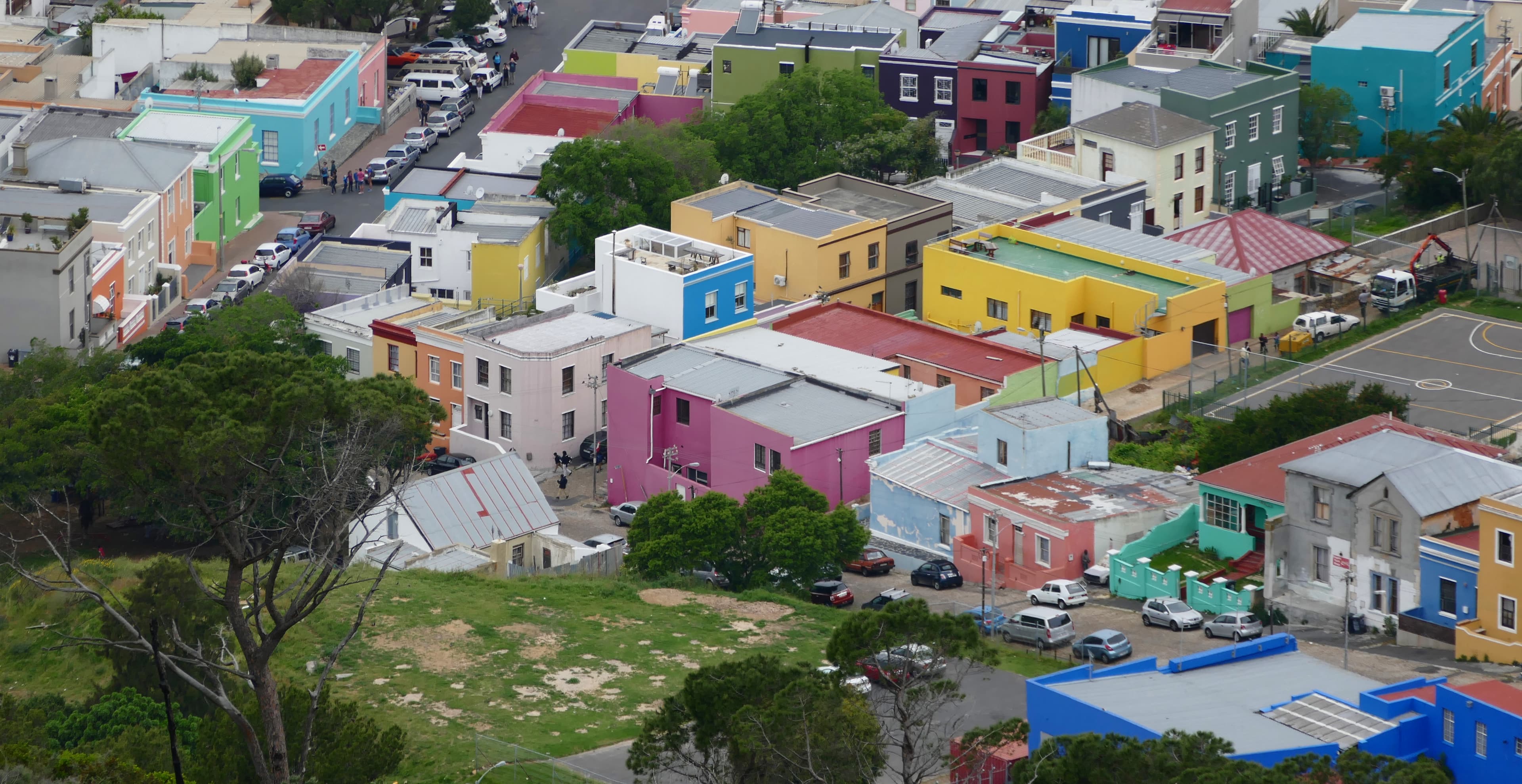 Culture & HistoryWestern Cape
Bo-Kaap
Beneath Signal Hill, a hillside of candy-bright houses and cobbled lanes holds Cape Town's oldest surviving residential quarter and the heart of Cape Malay culture.
Verified · 5 sources Culture & HistoryGauteng
Cradle of Humankind
The caves where some of our earliest ancestors were unearthed.
Verified · 2 sources

Sources
Verified · 5 sources
- GovernmentNA Approves South African Sign Language as the 12th Official LanguageParliament of the Republic of South Africa
- GovernmentPublic HolidaysSouth African Government (gov.za)
- Tourism boardPhoto etiquette - photographing people in South AfricaSouth African Tourism (southafrica.net)
- OperatorTravellers Guide to SA - Tips & RequirementsSouthern Africa Tourism Services Association (SATSA)
- MediaNavigating tipping in South Africa: What you need to knowCape Town ETC
Facts last reviewed Aug 24, 2026.