
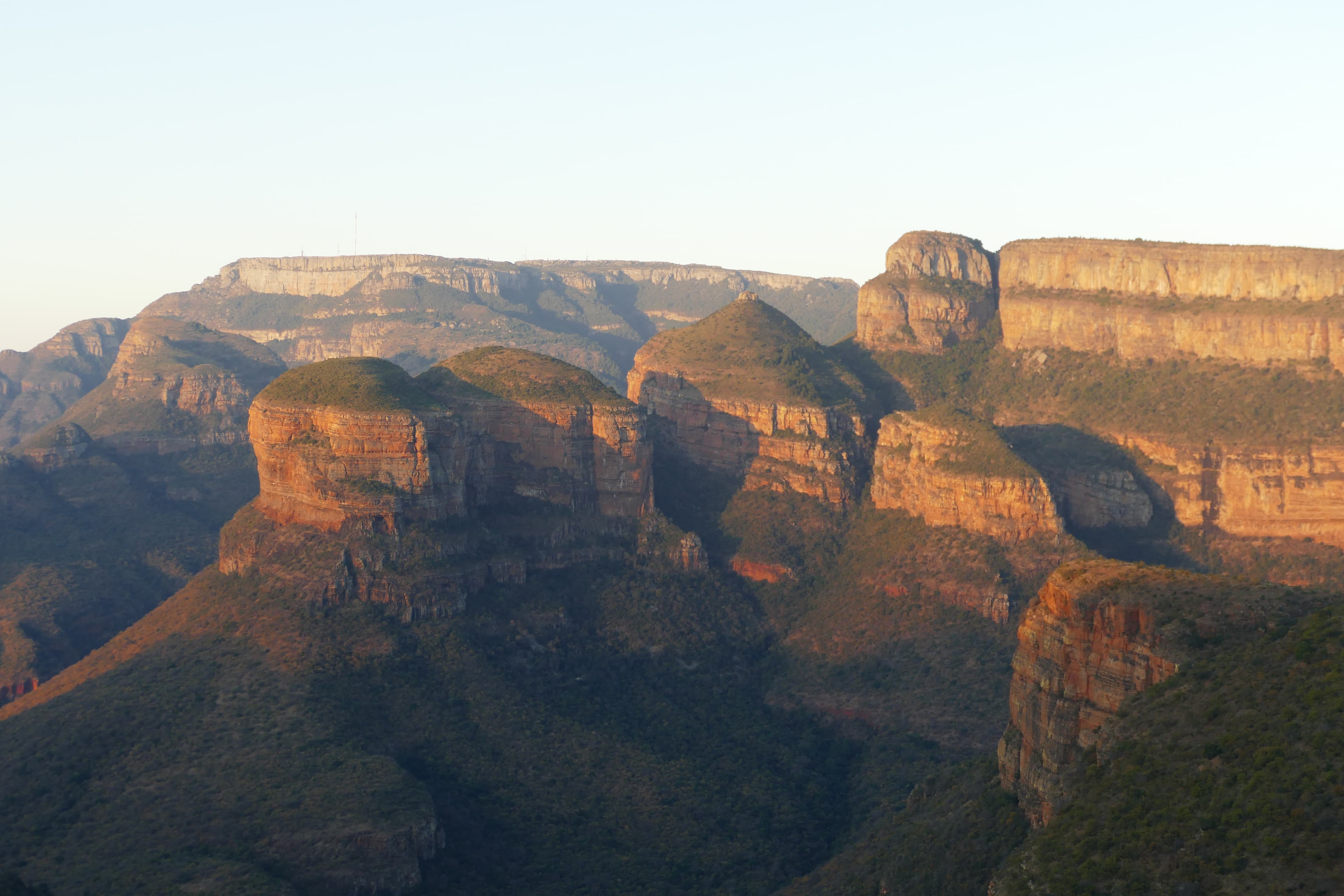
 EGilham, CC BY-SA 4.0 / Wikimedia Commons
Mpumalanga is a province of two halves. The high Grassland escarpment — cool, misty and forested — drops sharply at the Great Escarpment to the subtropical Lowveld, where the most-visited half of the Kruger National Park spreads across the bushveld. Between them lie the canyons and waterfalls of the Panorama Route and the Barberton Makhonjwa Mountains, whose rocks are among the oldest and best preserved on Earth.
- Biome
- Grassland (Highveld) & Savanna (Lowveld)
- Climate
- Summer rainfall; subtropical Lowveld, cooler Highveld
- Best time
- Jun–Sep — dry, prime game viewing, lower malaria risk
Biodiversity & landscape
Mpumalanga — the name means "the place where the sun rises" — is split by the Great Escarpment into two worlds: the cool, high Grassland of the Highveld and the hot, subtropical Savanna of the Lowveld. It anchors the Kruger to Canyons Biosphere Reserve, which spans roughly 2.9 million hectares across Mpumalanga and Limpopo and takes in three biomes — savanna, grassland and Afromontane forest. In the south, the Barberton Makhonjwa Mountains were inscribed as a UNESCO World Heritage Site in 2018 for their exceptionally old and well-preserved rocks, dated at around 3.2 to 3.6 billion years.
Fauna
The Lowveld holds the southern — and busiest — half of the Kruger National Park, delivering the Big Five and outstanding birdlife. Across its whole extent Kruger protects, by SANParks' count, 147 mammal species and 507 birds, along with many reptiles, fish and amphibians. Climbing to the escarpment, the cooler grasslands and forest patches add Afromontane and grassland species you will not meet on the plains below.
Flora
Lowveld bushveld dominates the east, while the moist, cool escarpment carries fire-maintained grassland threaded with pockets of Afromontane forest. Though that forest covers only about half a percent of South Africa, it holds a strikingly high share of the country's plant species, and the escarpment is home to local endemics such as the Blyde cycad and the Barberton daisy.
Where to go
- The Panorama Route — roughly 240 km of escarpment scenery taking in God's Window, Bourke's Luck Potholes, the Three Rondavels and Mac Mac Falls.
- Blyde River Canyon — a deep, green, subtropical canyon on the edge of the escarpment, often ranked among the largest in the world.
- Southern and central Kruger — the park's main rest camps and its highest concentrations of game.
- The Barberton Makhonjwa geotrail — a drive through some of the oldest exposed rock on the planet.
Weather & when to visit
Mpumalanga has a summer-rainfall climate with a sharp split by altitude. The Lowveld is subtropical — hot, wet summers and dry, mild winters — while the Highveld escarpment stays noticeably cooler. Malaria is present in the Lowveld, including Kruger, with risk running roughly September to May and easing in winter. The dry months of June to September are the best time for a safari: the bush thins, game gathers at the water, and both the heat and the malaria risk are at their lowest.
Places in Mpumalanga
- Nature & LandscapesMpumalanga
Blyde River Canyon
A vast, green-walled canyon and the highlight of the Panorama Route.
Verified · 1 source 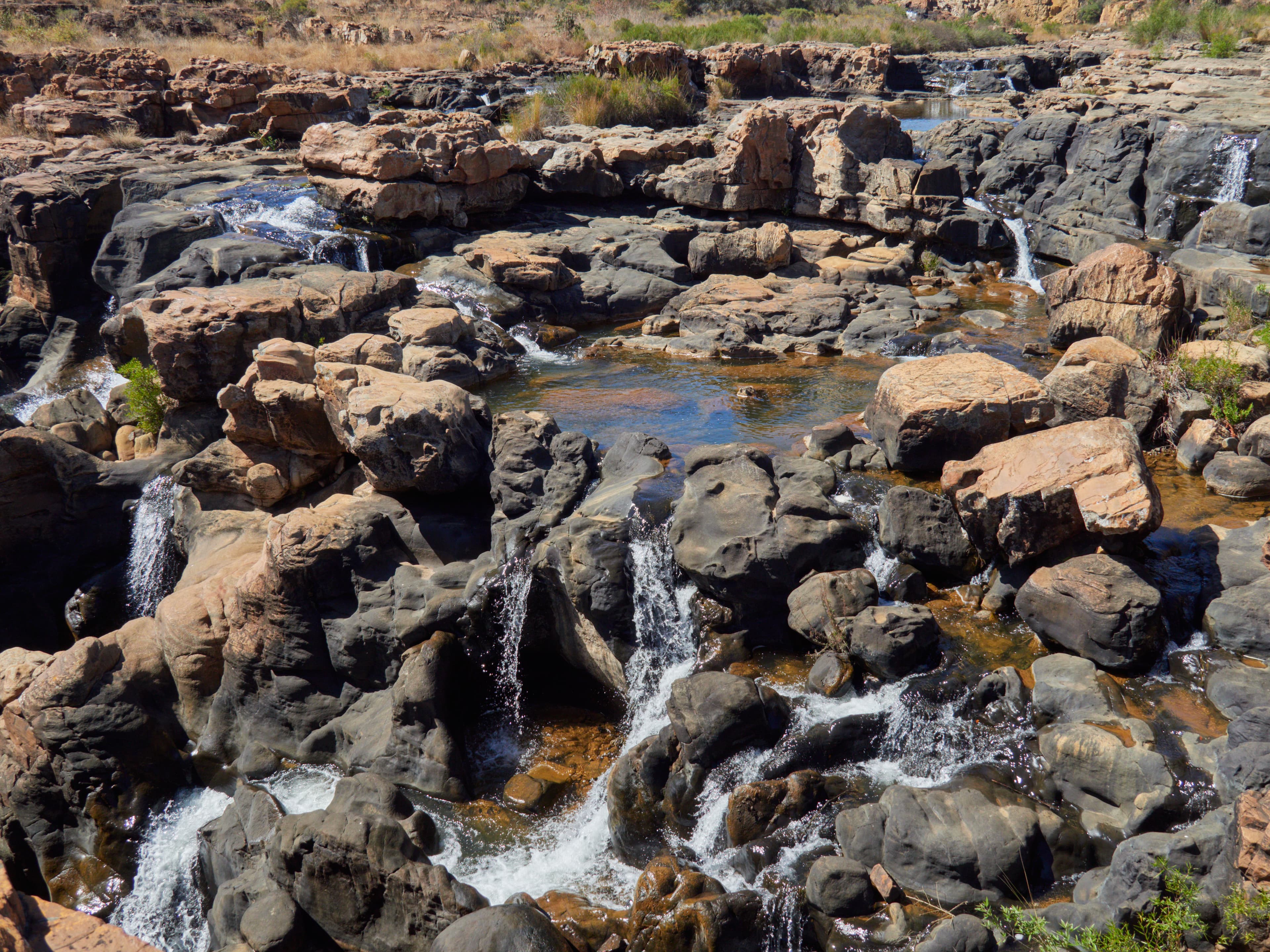 Nature & LandscapesMpumalanga
Bourke's Luck Potholes
Swirling rivers have drilled deep cylindrical potholes into the rock here, at the joy-and-sorrow confluence that opens the Blyde River Canyon.
Verified · 2 sources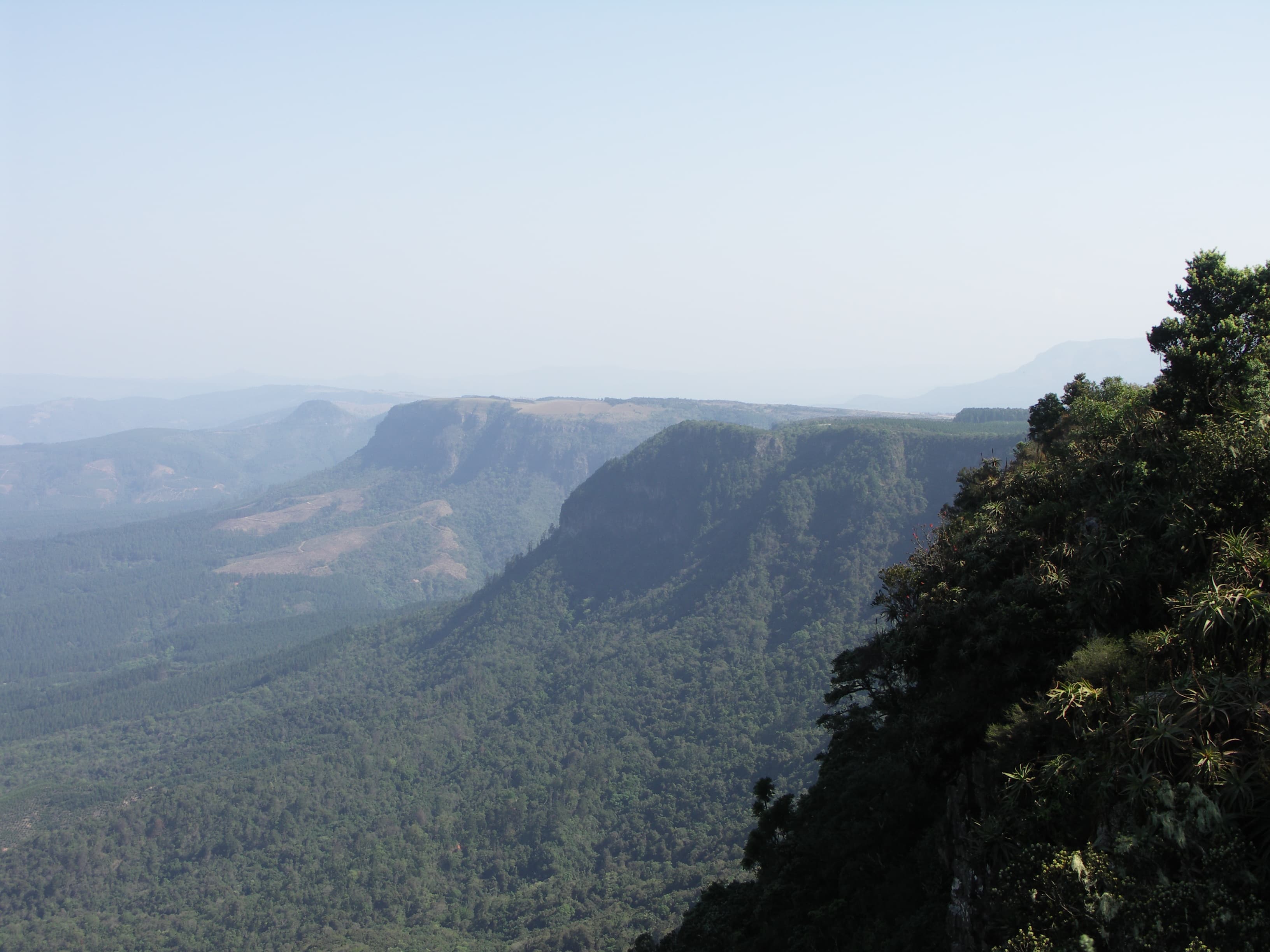 Nature & LandscapesMpumalanga
God's Window
A dizzying Panorama Route viewpoint where the Drakensberg escarpment falls roughly 700 m to the Lowveld and Kruger stretches toward the horizon.
Verified · 2 sources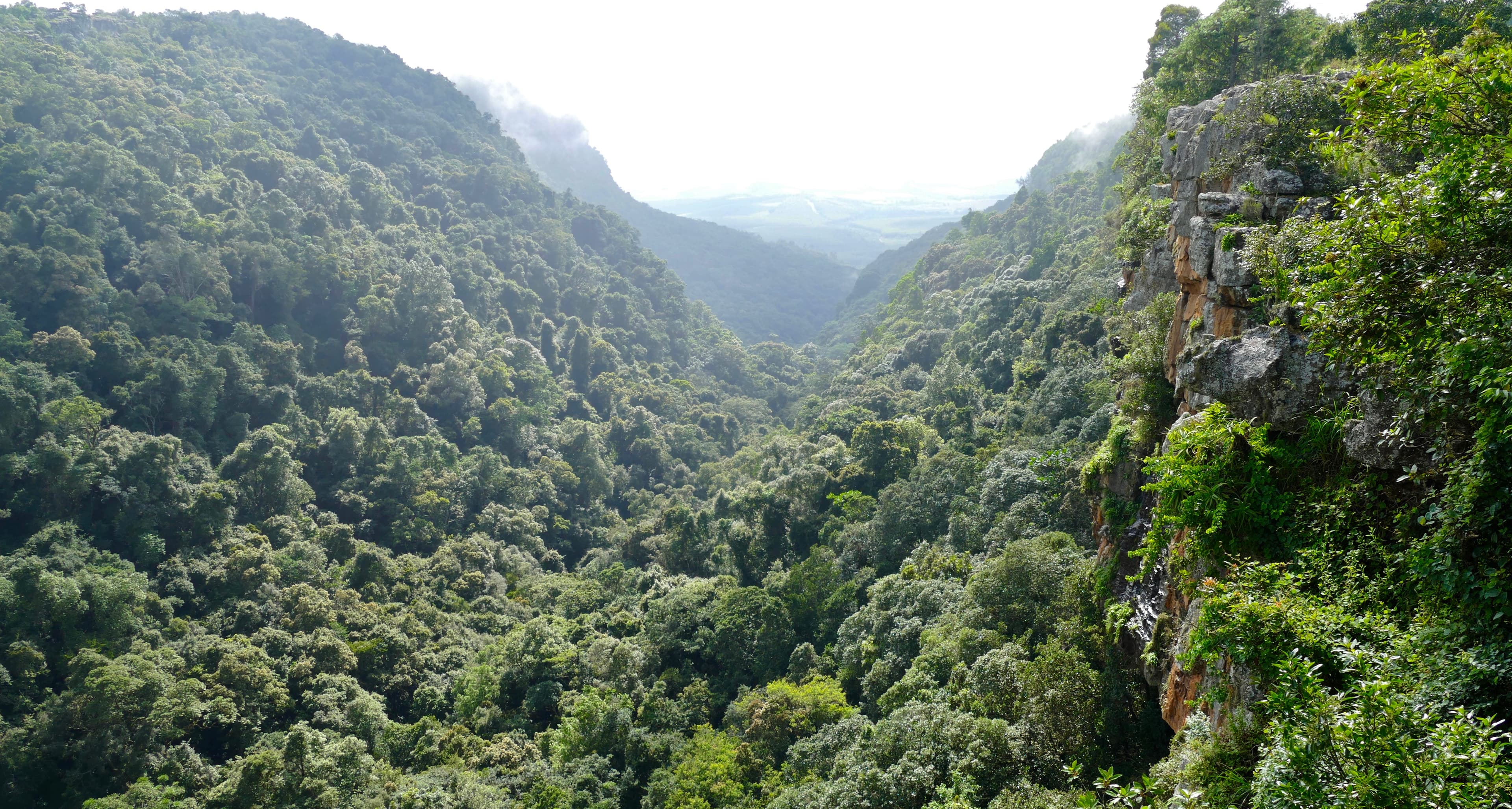 Adventure & ActivitiesMpumalanga
Graskop Gorge Lift
Ride a glass elevator 51 m down a forested cliff on the Panorama Route — or freefall 70 m at up to 140 km/h on the Big Swing.
Verified · 2 sources- Wildlife & SafariMpumalanga
Kruger National Park
South Africa's flagship safari — Big Five country roughly the size of a small nation.
Verified · 33 sources 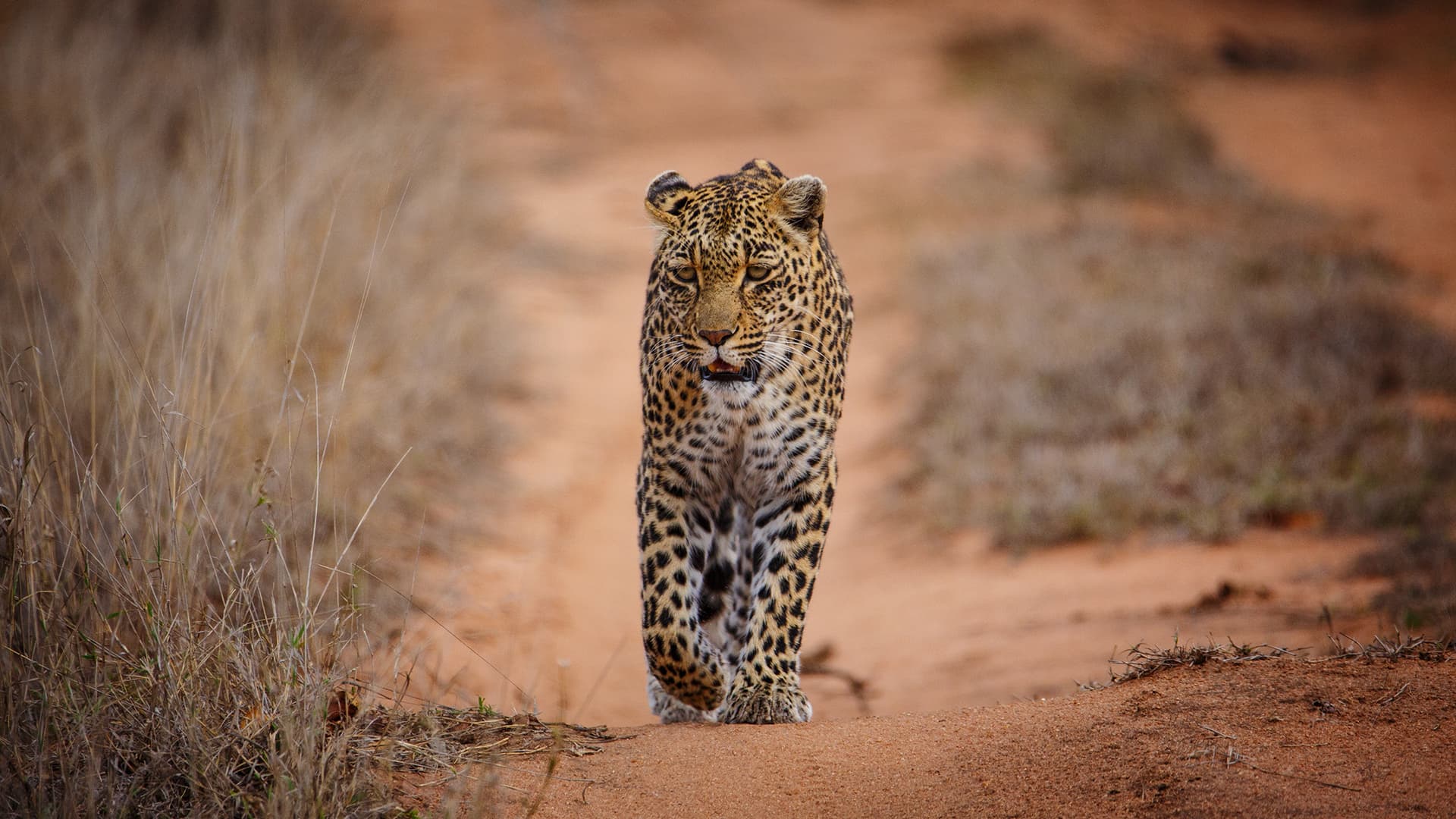 Wildlife & SafariMpumalanga
Sabi Sand Game Reserve
On Kruger's unfenced western edge, this pioneering private reserve is said to deliver Africa's most reliable leopard sightings, with the Big Five roaming freely across some 65,000 hectares of Lowveld wilderness.
Verified · 4 sources


Sources
Verified · 6 sources
- UNESCOBarberton Makhonjwa Mountains — UNESCO World Heritage ListUNESCO World Heritage Centre
- UNESCOKruger to Canyons Biosphere ReserveUNESCO — Man and the Biosphere Programme
- GovernmentKruger National Park — mammals and biodiversitySANParks
- Academic / referenceForest patches and Afromontane diversity of the escarpmentBMC Ecology (peer-reviewed)
- Tourism boardGod's Window, a Lowveld highlight (Panorama Route)South African Tourism (southafrica.net)
- MediaMpumalanga weather and climateSA-Venues.com
Facts last reviewed Aug 26, 2026.
Provincial capital confirmed via South Africa Info.